





Tel: 0086-576-88113919
Fax:0086-576-88129398
Fax:0086-576-88129398
Views: 0 Author: Site Editor Publish Time: 2026-06-25 Origin: Site

Choosing the perfect capacity requires an understanding of your specific coverage areas, the physical limitations of your workforce, and the operational efficiency of different equipment sizes. To choose the ideal capacity of a knapsack sprayer, you must match the total square footage of your target area with the maximum fluid weight an operator can comfortably carry, typically ranging from 12 liters for light duty to 20 liters for heavy-scale agricultural applications. Selecting the proper volume ensures you minimize costly refilling downtime while protecting your workforce from repetitive strain injuries.
In the sections below, we will break down the precise calculations, operational tradeoffs, and ergonomic factors that dictate the ideal tank volume for your business. We will explore how different capacities perform in real-world scenarios and provide a comprehensive framework to streamline your next bulk equipment purchase.
Section | Summary |
Understanding the Importance of Knapsack Sprayer Capacity | Explains why fluid volume acts as a critical bottleneck for commercial spraying efficiency and labor costs. |
The Direct Relationship Between Capacity and Operator Fatigue | Evaluates the physical weight constraints of liquid chemicals and how payload impacts worker endurance. |
Matching Tank Volume to Target Application Areas | Outlines the optimal tank sizes for varying property dimensions to reduce unnecessary refilling cycles. |
Comparing Small, Medium, and Large Knapsack Sprayer Sizes | Provides a detailed breakdown of the unique industrial use cases for 12L, 16L, and 20L chemical tanks. |
Key Components That Support High-Capacity Sprayers | Examines the internal pump systems and structural elements required to manage heavy liquid payloads. |
Ultimate Selection Matrix for B2B Procurement Buyers | Delivers a data-driven purchasing guide to help agricultural and commercial buyers order the right inventory. |
The capacity of a knapsack sprayer dictates your entire operational workflow by establishing the maximum chemical payload per fill and determining how frequently an operator must halt work to reload. This volume directly influences labor efficiency, chemical mixing accuracy, and overall project timelines.
When executing large-scale chemical applications in agriculture or commercial landscaping, time spent walking back to a mixing station is fundamentally wasted labor. A small tank requires frequent refilling cycles, which disrupts the application pattern and leads to uneven chemical distribution across large fields. Conversely, choosing an optimized knapsack sprayer configuration allows operators to complete vast grids in a single pass, ensuring a more uniform application of pesticides or fertilizers.
Furthermore, capacity selection carries substantial economic implications for B2B buyers and commercial spraying contractors. If your fleet utilizes tanks that are too small for the target acreage, your labor costs will skyrocket due to inefficient time utilization. On the other hand, purchasing oversized tanks for small-scale operations leads to unnecessary capital expenditure and forced under-utilization of equipment. Aligning tank capacity with your precise operational demands protects your bottom line and ensures maximum equipment ROI.
Managing the physical weight of a full knapsack sprayer is crucial because liquid payloads exert severe gravitational force on the human body, directly impacting worker safety and daily endurance. Striking the correct balance between maximum chemical capacity and operator physical stamina prevents workplace injuries and maintains consistent daily output.
Liquid payload calculations are uncompromising; every single liter of water-based chemical solution adds exactly one kilogram of dead weight to the operator's back. When you utilize a high-capacity 12L-16L-18L-20L hand-operated spray machine agriculture knapsack sprayer system, a completely full 20-liter setup will weigh over 20 kilograms once you account for the dry weight of the chassis, wand, and pump assembly. Carrying this heavy load over uneven agricultural terrain for eight hours a day requires significant physical stamina and robust, ergonomic shoulder support systems.
If the payload exceeds the physical comfort threshold of your workforce, productivity drops sharply in the afternoon hours. Operators will naturally slow down, take more frequent rest breaks, and may exhibit poor spraying technique due to muscle exhaustion. For businesses managing large crews, selecting a balanced capacity or optimizing a fleet with multiple sizes ensures that physical strain is minimized while operational coverage remains highly effective.
To achieve maximum operational efficiency, you must calculate the exact square footage of your target application area and choose a knapsack sprayer capacity that finishes the zone with minimal refills. This mathematical alignment forms the baseline of professional landscaping and agronomic project planning.
For small residential properties, commercial greenhouses, or targeted spot-spraying in urban gardens, a heavy tank is entirely unnecessary. Small zones measuring under 5,000 square feet are easily served by lower-capacity models, allowing operators to move swiftly through tight rows or ornamental landscapes without dragging unneeded weight. In these constrained environments, agility and precision trump raw fluid volume every single time.
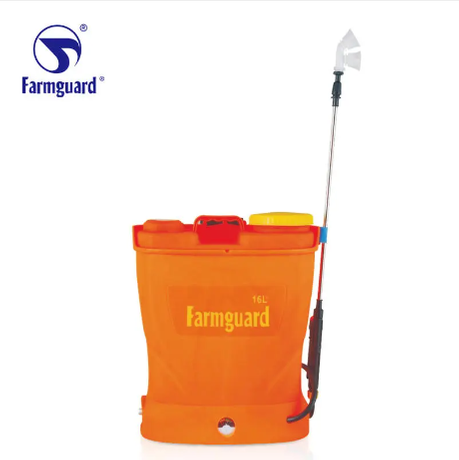
When moving into large-scale agricultural sectors or expansive commercial orchards, the coverage equation changes dramatically. Land masses exceeding half an acre demand a high-capacity 16L knapsack manual air pressure sprayer machine usage in agriculture and garden configuration to maintain acceptable work rates. The chart below provides a reference framework for matching total land area to the minimum recommended fluid capacities required to prevent excessive workflow disruption:
Target Application Area (Sq. Meters) | Typical Land Type | Recommended Tank Capacity (Liters) | Estimated Refills Per Acre |
Under 500 | Greenhouse / Domestic Garden | 10L to 12L | Not Applicable |
500 to 1,500 | Commercial Orchards / Estates | 15L to 16L | 2 to 3 Refills |
1,500 to 4,000+ | Broadacre Crop Fields / Farmland | 18L to 20L | 1 to 2 Refills |
Analyzing the specific operational advantages of small, medium, and large knapsack sprayer configurations allows procurement managers to select the precise tool tailored to their industry vertical. Each volume classification serves a distinct segment of the agricultural and property maintenance markets.
Small capacity models are designed with a primary focus on portability, operator comfort, and high maneuverability. These units are highly favored by pest control operators working inside tight commercial buildings, structural perimeters, and specialized greenhouse nurseries. Because the total filled weight remains well under 15 kilograms, these sprayers can be comfortably operated by a wide demographic of workers without causing premature physical fatigue.
The 15-liter to 16-liter segment represents the global industry standard for commercial agriculture and multi-acre property management. This size provides the ultimate sweet spot, balancing an impressive coverage area with a physical weight profile that remains manageable for extended work shifts. It holds enough volume to handle substantial crop rows while allowing the operator to navigate moderate slopes and terraced farmlands without excessive physical strain.
Large capacity models ranging from 18 to 20 liters are engineered explicitly for industrial agricultural applications, extensive forestry projects, and broadacre weed control. These units maximize the unbroken spraying time before requiring a trip back to the chemical mixing station. They are ideally deployed on flat terrain where operators can maintain a steady, unhindered pace, turning raw fluid capacity into rapid field coverage.
High-capacity sprayers require premium internal components, heavy-duty structural frames, and advanced pressure delivery systems to successfully handle the mechanical stress of large chemical payloads. Understanding these internal mechanisms allows buyers to source durable equipment that will withstand grueling field conditions.
When handling large liquid volumes, the manual or automated pump assembly must work harder to maintain consistent pressure lines. Commercial operators must understand the internal engineering, including how various valves, diaphragms, and power delivery elements interact under high-load conditions. For a comprehensive breakdown of these technical systems, reviewing a detailed guide on the parts of electric knapsack sprayer will reveal how modern battery-powered pumps reduce operator manual labor while efficiently dispensing high-volume chemical payloads.
Beyond the internal pump mechanics, the physical structural interface becomes vital as tank capacity scales upward. High-volume units require extra-wide, padded shoulder harnesses, contoured backrests with integrated ventilation slots, and robust chemical-resistant seals. These structural features ensure that the heavy fluid payload is distributed evenly across the operator's hips and shoulders, preventing pressure points and maximizing long-term mechanical reliability in the field.
The definitive selection matrix for enterprise procurement involves balancing your team's labor availability, specific crop types, terrain profiles, and total capital investment metrics. By utilizing a structured decision framework, commercial operations can optimize their equipment fleets to achieve maximum field efficiency.
To finalize your purchasing strategy, cross-reference your specific commercial application with the operational criteria detailed in the comprehensive decision matrix below:
Terrain Topography Analysis: If your target agricultural fields feature steep inclines, terraced crop layouts, or highly unstable muddy footing, prioritize lower-weight 12L to 16L systems to protect worker balance and safety. Save the heavy 20L tanks exclusively for flat, uniform broadacre fields.
Chemical Application Frequency: Operations requiring continuous, daily application runs benefit immensely from mid-to-large capacity tanks that minimize downtime. For intermittent or highly targeted spot applications, smaller tanks prevent chemical waste and reduce cleaning times.
Workforce Demographics and Ergonomics: Evaluate the physical capabilities of your field crew. Purchasing heavy-capacity equipment that your workforce struggles to carry safely results in immediate productivity drops and increased liability.
Fleet Scalability and Standardization: For large commercial enterprises, standardizing your fleet around highly versatile 16-liter models simplifies spare parts management, streamlines operator training, and ensures consistent application rates across all field teams.
By systematically evaluating these specific environmental and operational variables, commercial enterprise buyers can confidently select the perfect tank capacity, securing a highly productive, safe, and efficient chemical application lifecycle.
Taizhou Guangfeng Plastic Co.,Ltd is specialized in manufacturing agriculture knapsack sprayers and garden sprayers for more than 28 years.Products exported to over 50 countries and our brand Farmguard shares great fame in the world. If you want to know more, welcome to contact us.